Ingrown Toenails – Causes, Symptoms, Treatment & When Surgery Is Needed
Ingrown Toenails – Causes, Symptoms, Treatment & When Surgery Is Needed
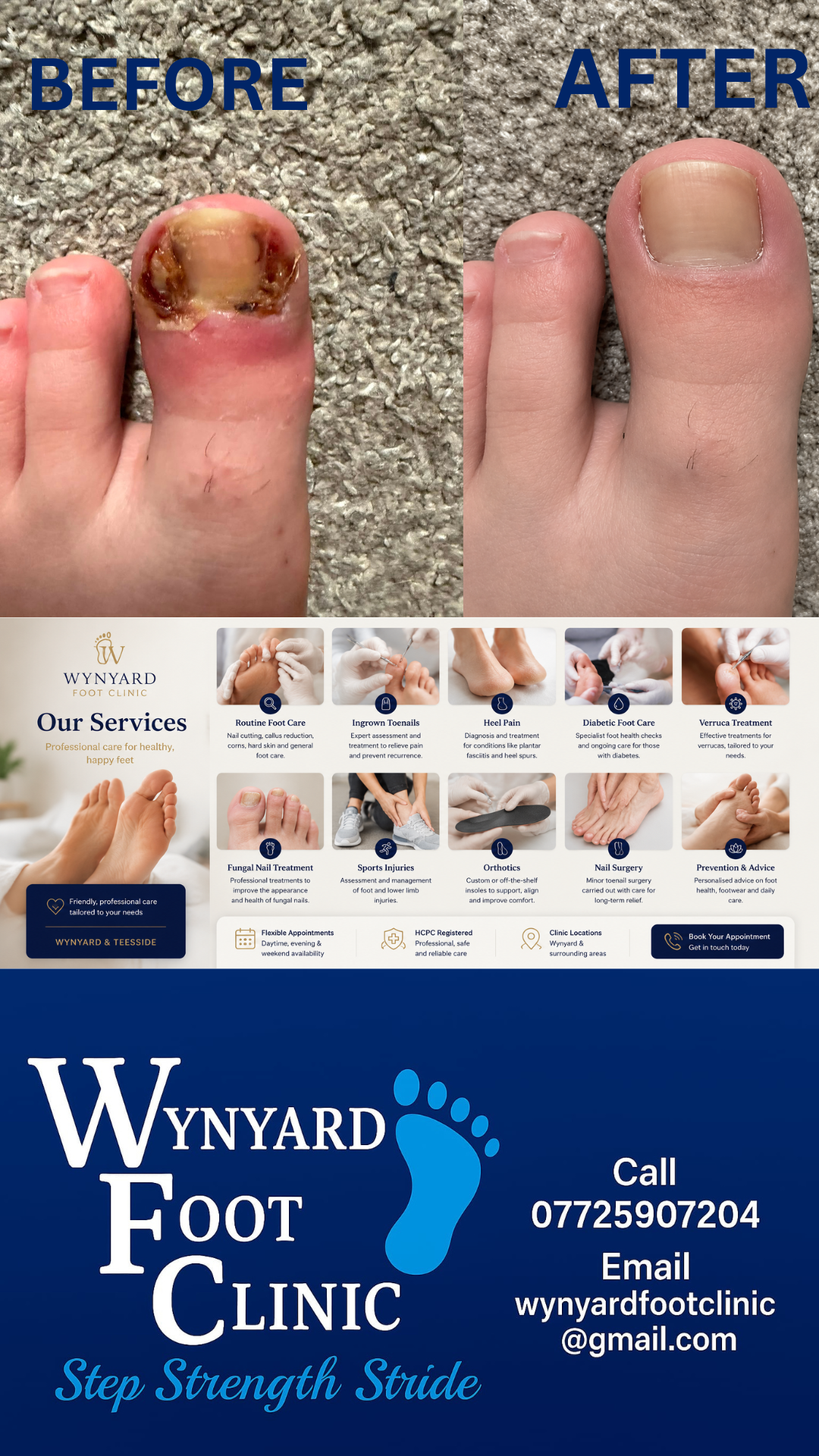
An ingrown toenail is one of the most common foot conditions treated by podiatrists. While it may begin as mild tenderness, it can quickly become painful, swollen and infected if left untreated. At Wynyard Foot Clinic, we provide expert diagnosis and treatment for ingrown toenails, helping patients across Wynyard, Stockton-on-Tees, Billingham, Yarm, Hartlepool, Middlesbrough, Eaglescliffe, Ingleby Barwick and the wider Teesside area return to pain-free living.
What Is an Ingrown Toenail?
An ingrown toenail occurs when the edge or corner of the toenail grows into the surrounding skin instead of growing straight. This causes irritation, inflammation and pain, and in many cases can lead to infection. Although any toenail can become ingrown, the condition most commonly affects the big toe.
Without professional treatment, an ingrown toenail can continue to worsen, making walking, exercising and even wearing shoes uncomfortable.
What Causes Ingrown Toenails?
There are several reasons why an ingrown toenail may develop, including:
- Cutting toenails too short or rounding the corners
- Wearing tight or narrow footwear
- Injury or trauma to the toenail
- Naturally curved or thick toenails
- Repetitive pressure from sport or work boots
- Excessive sweating
- Poor foot hygiene
- Family history and genetics
Understanding the underlying cause allows our podiatrists to recommend the most effective treatment and help prevent the problem from returning.
Common Symptoms
Symptoms can vary depending on the severity of the condition but often include:
- Pain along the side of the toenail
- Redness and swelling
- Tenderness when touched
- Difficulty wearing shoes
- Pain when walking
- Bleeding around the nail
- Pus or discharge
- Infection
- Overgrown skin around the nail
- Recurring inflammation
If you notice any signs of infection, it is important to seek professional treatment as soon as possible.
When Should You See a Podiatrist?
You should arrange an appointment if:
- The pain continues for more than a few days.
- Your toe is swollen or infected.
- The nail repeatedly becomes ingrown.
- Walking has become painful.
- Home treatment has not worked.
- You have diabetes.
- You have poor circulation.
- You have reduced sensation in your feet.
Patients with diabetes should never attempt to remove an ingrown toenail themselves due to the increased risk of infection and complications.
How We Diagnose an Ingrown Toenail
At Wynyard Foot Clinic, every patient receives a comprehensive assessment. We carefully examine the affected toe, assess the severity of the ingrown nail, check for signs of infection, evaluate circulation where appropriate and discuss your medical history before recommending the most suitable treatment.
Non-Surgical Treatment
Many ingrown toenails can be successfully treated without surgery, particularly when diagnosed early.
Treatment may include:
- Removing the offending nail edge
- Reducing pressure on the affected toe
- Cleaning and dressing the area
- Professional nail care
- Advice on footwear
- Nail cutting guidance
- Ongoing podiatry treatment where required
Early treatment often provides immediate pain relief and helps prevent future complications.
When Is Nail Surgery Needed?
If your ingrown toenail continues to return despite previous treatment, minor nail surgery may provide the best long-term solution.
Nail surgery may be recommended if:
- You suffer recurring ingrown toenails.
- Conservative treatment has failed.
- The toe becomes repeatedly infected.
- The pain is severe.
- Walking is becoming difficult.
- The nail is naturally very curved.
Minor nail surgery has an excellent success rate and provides long-lasting relief for most patients.
What Happens During Nail Surgery?
Minor nail surgery is carried out under local anaesthetic, meaning the toe is completely numb throughout the procedure.
The treatment usually involves:
- Applying local anaesthetic
- Removing the affected section of nail
- Treating the nail root to reduce regrowth where appropriate
- Applying a protective dressing
- Providing detailed aftercare advice
The procedure is completed in clinic, allowing you to return home the same day.
Recovery After Nail Surgery
Recovery is generally straightforward when aftercare advice is followed.
Patients are usually advised to:
- Keep the dressing clean and dry initially
- Attend any recommended follow-up appointments
- Wear comfortable footwear
- Avoid strenuous activity for a short period
- Follow the aftercare instructions provided by your podiatrist
Most patients return to their normal daily routine quickly.
How to Prevent Ingrown Toenails
You can reduce the risk of developing ingrown toenails by:
- Cutting toenails straight across
- Avoiding cutting nails too short
- Wearing correctly fitting footwear
- Keeping your feet clean and dry
- Avoiding picking or tearing nails
- Seeking professional treatment as soon as symptoms develop
Why Choose Wynyard Foot Clinic?
At Wynyard Foot Clinic, we are committed to providing professional, evidence-based podiatry care in a welcoming clinical environment. Our experienced team offers comprehensive assessments, conservative treatments and minor nail surgery using modern techniques to achieve the best possible outcomes.
We proudly care for patients from Wynyard, Stockton-on-Tees, Billingham, Yarm, Eaglescliffe, Ingleby Barwick, Norton, Hartlepool, Middlesbrough, Sedgefield and across the wider Teesside area.
Frequently Asked Questions
Can an ingrown toenail heal without treatment?
Very mild cases may improve, but most continue to worsen without professional care.
Is nail surgery painful?
No. A local anaesthetic is used to numb the toe, so you should not feel pain during the procedure.
Can ingrown toenails come back?
Yes, particularly if the underlying cause is not addressed. Minor nail surgery is often recommended for recurring cases.
Can I remove an ingrown toenail myself?
It is not recommended. Attempting to remove an ingrown nail at home can increase the risk of infection and further damage.
Do you treat diabetic patients?
Yes. We provide specialist diabetic foot care and recommend diabetic patients seek professional treatment promptly if they develop an ingrown toenail.
Book an Appointment
If you're experiencing pain, swelling or a recurring ingrown toenail, our experienced podiatrists are here to help. Wynyard Foot Clinic offers expert ingrown toenail treatment and minor nail surgery for patients across Wynyard, Stockton-on-Tees, Billingham, Yarm, Hartlepool, Middlesbrough and the surrounding Teesside area.
Contact Wynyard Foot Clinic today to book your appointment and take the first step towards healthier, pain-free feet.